
Mithila Milk Union, Samastipur, Bihar: A Comprehensive Analysis and the Contributions of Managing Director D.K. Srivastava (2014-2022)
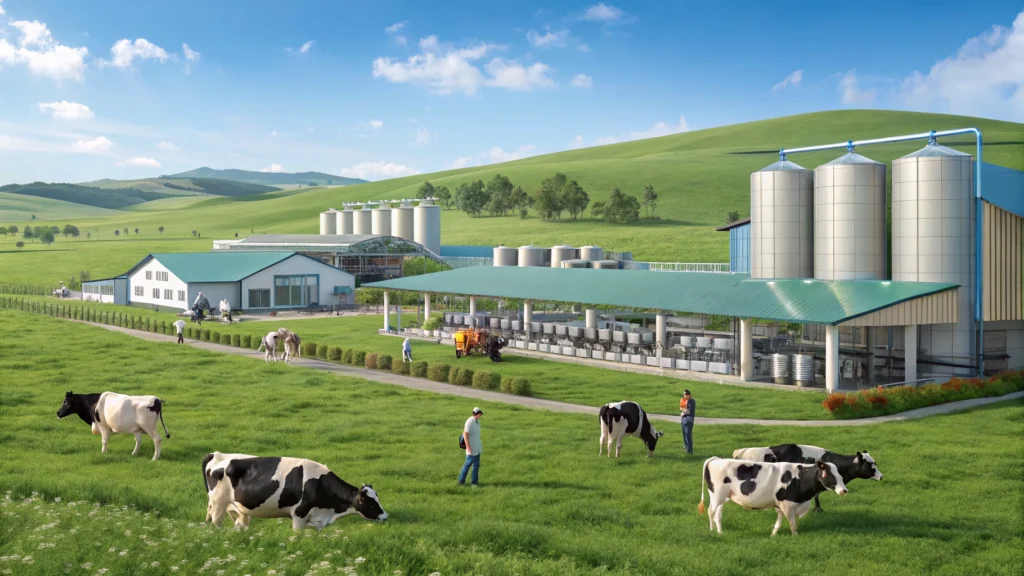
Organizational Overview and History Mithila Milk Union, officially registered as Mithila Dugdh Utpadak Sahkari Sangh Ltd., represents one of Bihar’s most significant dairy cooperative institutions. Established on September 14, 1987, under the Operation Flood Programme of the Government of India, the union was formed under the Bihar State Co-operative Societies Act, 1935, following the Anand pattern of dairy development. The union’s operational jurisdiction encompasses three districts: Samastipur (where its headquarters is located), Darbhanga, and Madhubani. This milkshed area represents a crucial component of Bihar’s dairy ecosystem, operating under the umbrella of the Bihar State Milk Co-operative Federation Ltd. (COMFED), which markets products under the iconic “Sudha” brand. Historical Evolution and Infrastructure Development The union’s journey began modestly during the 1970s when milk procurement was handled by the Barauni Creamer through vendors engaged by Dairy Cooperative Societies (DCS). This system continued under the aegis of the Dairy Development Department of the Government of Bihar until 1973-74, after which it was taken over by Bihar State Dairy Corporation. With the formation of COMFED in 1983-84, all procuring and chilling units were transferred to COMFED on a management basis. Starting with the Milk Chilling Centre at Tajpur with a handling capacity of 10,000 Litres Per Day (LPD), Mithila Milk Union has expanded considerably over the decades. The union currently owns and manages: Tajpur Chilling Centre: 10,000 LPD capacity Rosera Chilling Centre: 20,000 LPD capacity Darbhanga Packing Station-cum-Processing Plant: 50,000 LPD capacity Samastipur Dairy Plant: 250,000 LPD capacity (the flagship facility) The full-fledged dairy at Samastipur was installed in 1999 with an initial capacity of 40,000 LPD, receiving financial assistance from the District Rural Development Agency (DRDA), Samastipur. The processing facility underwent significant expansion from 40,000 litres to 1.0 Lakh Litres Per Day (LLPD) in 1999, and subsequently to 2.50 LLPD in 2010, with financial assistance from the National Cooperative Development Corporation (NCDC). In 2020, the Bihar Government sanctioned a major infrastructure upgrade, approving a ₹61.21 crore dairy plant expansion at Samastipur. This investment was part of a broader state initiative to strengthen dairy infrastructure and enhance rural incomes through boosted processing capacity. Quality Certifications and Standards Mithila Milk Union achieved significant quality milestones by obtaining ISO 9001:2000 and HACCP (IS-15000) certification from the Bureau of Indian Standards in 2003. These certifications underscore the union’s commitment to maintaining international quality standards in milk processing and food safety management. The dairy operates as an ISO 9001-2008 and HACCP certified facility, ensuring adherence to stringent quality control measures. Procurement and Production Capacity Mithila Milk Union has demonstrated remarkable growth in milk procurement. Through dedicated efforts, the union procures an average of 355,000 LPD milk from its producer farmers. The union’s procurement network is extensive, with milk collection conducted at the village level through an organized system of Dairy Cooperative Societies. To ensure milk quality at the grassroots level, the union has established 55-58 Bulk Milk Coolers (BMCs), predominantly of 5 KL capacity, at DCS level under various government schemes including Rashtriya Samvikās Yojana (RSVY) and Rashtriya Krishi Vikas Yojana (RKVY) implemented by the Government of Bihar. These BMCs collectively handle approximately 255,000 litres of milk per day, ensuring immediate chilling to maintain quality. According to data from the 2014-15 period, the union organized 2,170 dairy cooperative societies covering 1,545 revenue villages, connecting approximately 150,000 milk producers and their families. By March 2015, daily average milk collection reached 3.55 lakh litres with 1.48 lakh litres dedicated to marketing. Marketing and Distribution Mithila Milk Union markets pasteurized pouch-filled liquid milk in the urban areas of Samastipur, Darbhanga, and Madhubani districts, with an average sale of 156,000 LPD. The surplus milk beyond local marketing requirements is supplied to marketing dairies in Jharkhand and Mother Dairy Delhi. The union is well-equipped for efficient milk reception, processing, quality control, and storage, committed to timely supply of safe milk to customers. The union also markets various milk products including peda, kalakand, paneer, rasogulla, gulabjamun, butter, lassi, and misti dahi on behalf of sister unions through milk outlets, creating a wider customer base and stronger brand loyalty under the Sudha brand. During the Makar Sankranti festival period in 2021 (January 9-14), the union achieved record sales, with 1.98 lakh kg of curd and 17 lakh litres of milk sold. This achievement demonstrated the union’s capacity to meet seasonal demand spikes effectively. Cooperative Structure and Governance Mithila Milk Union operates under a democratic cooperative structure managed by an elected Board of Directors comprising an elected Chairman and eleven farmer-members belonging to the DCS at village level. The board also includes representatives from COMFED and the National Dairy Development Board (NDDB). The Managing Director, recruited by the Board, oversees day-to-day operations. The union’s mission emphasizes transparency, discipline, efficiency, and foresight in ensuring economic, social, and holistic development of producer-members by providing fair value for milk produced and necessary services for quality milk production at the rural level. Farmer Support Services Mithila Milk Union is deeply involved in enhancing milk production through comprehensive support services at every stage: 1. Artificial Insemination Services: The union provides technical inputs through trained self-employed AI workers from the same villages, ensuring genetic improvement of milch animals. 2. Veterinary Health Services: Regular veterinary health camps are organized covering disease control measures through first aid, vaccination, and deworming. 3. Input Supply: The union arranges daily supply of balanced cattle feed, fodder seeds, bypass protein feed, mineral mixtures, and calcium at farmers’ doorsteps on a no-loss-no-profit basis through milk transport vehicles. 4. Technology Transfer: The union engages in transferring technologies and creating awareness among producer-members through different extension media and methods to enhance milk production and procurement. 5. Training Programs: Cooperative Development Programs are conducted at Darbhanga and Madhubani district levels, providing training on producer rights, duties, milk production cost reduction, and benefits of milk cooperation. Awards and Recognition Mithila Milk Union has received numerous accolades for its outstanding performance: Best Award (2013): Honored by Chief Minister Nitish Kumar on the occasion of COMFED’s 30th Foundation Day for best-performing committees in Bihar.